Designing a Simpler Way to Dispute Transactions
Summary
TK
Company
Discover
Role
Design Director
Team
Matthew R, Strategy
McKenzie B, Design
Brian R, Product
Timeline
6 months
Problem
Discover’s merchant dispute experience was only available on the web, despite the majority of customer logins occurring in the mobile app. As a result, 70% of disputes were initiated through phone agents, at a cost of up to $30 per call. Customers frequently switched channels and often called for reassurance or status updates. This disconnect between user behavior and platform capability created significant operational strain and avoidable service costs.
Problem and Constraints
Federal regulations require that customers be able to dispute any transaction, but disputes are high-stress moments. When customers can’t recognize a charge, frustration rises and they call. The clearer and faster we guide them to resolution, the better the experience and the lower the cost.Upside historically helped users earn cash back on gas by uploading receipts after fueling. Pay at the Pump fundamentally changed this model by allowing users to pay for fuel directly in the Upside app, unlock a pump remotely, and receive instant cash back—no receipt, no waiting.
Research
TK
Guiding Customers to the Fastest Resolution
The first step in the experience asks whether the customer has already contacted the merchant. In many cases, issues can be resolved more quickly with the merchant than through a formal dispute, which can take up to 60 days. Through several design explorations, we tested different icons, layouts, and language to ensure the message was clear and supportive. A key goal was helping users understand their options without making the screen feel like an error state or an ad, which some icons unintentionally communicated. The final design strikes a balance between guiding customers toward the fastest resolution while still making it easy to proceed with a dispute if needed.
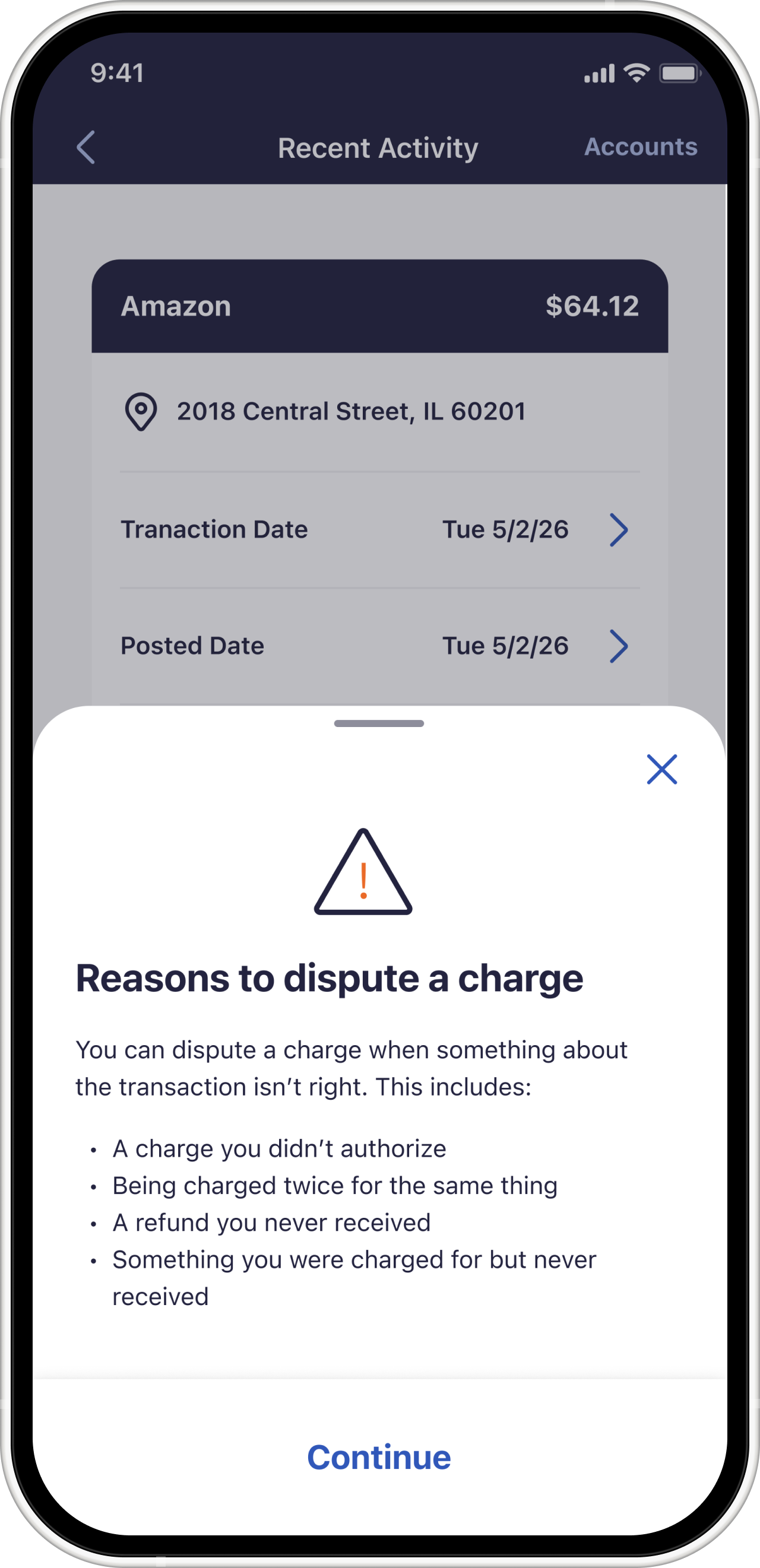
Deflect Exploration 1
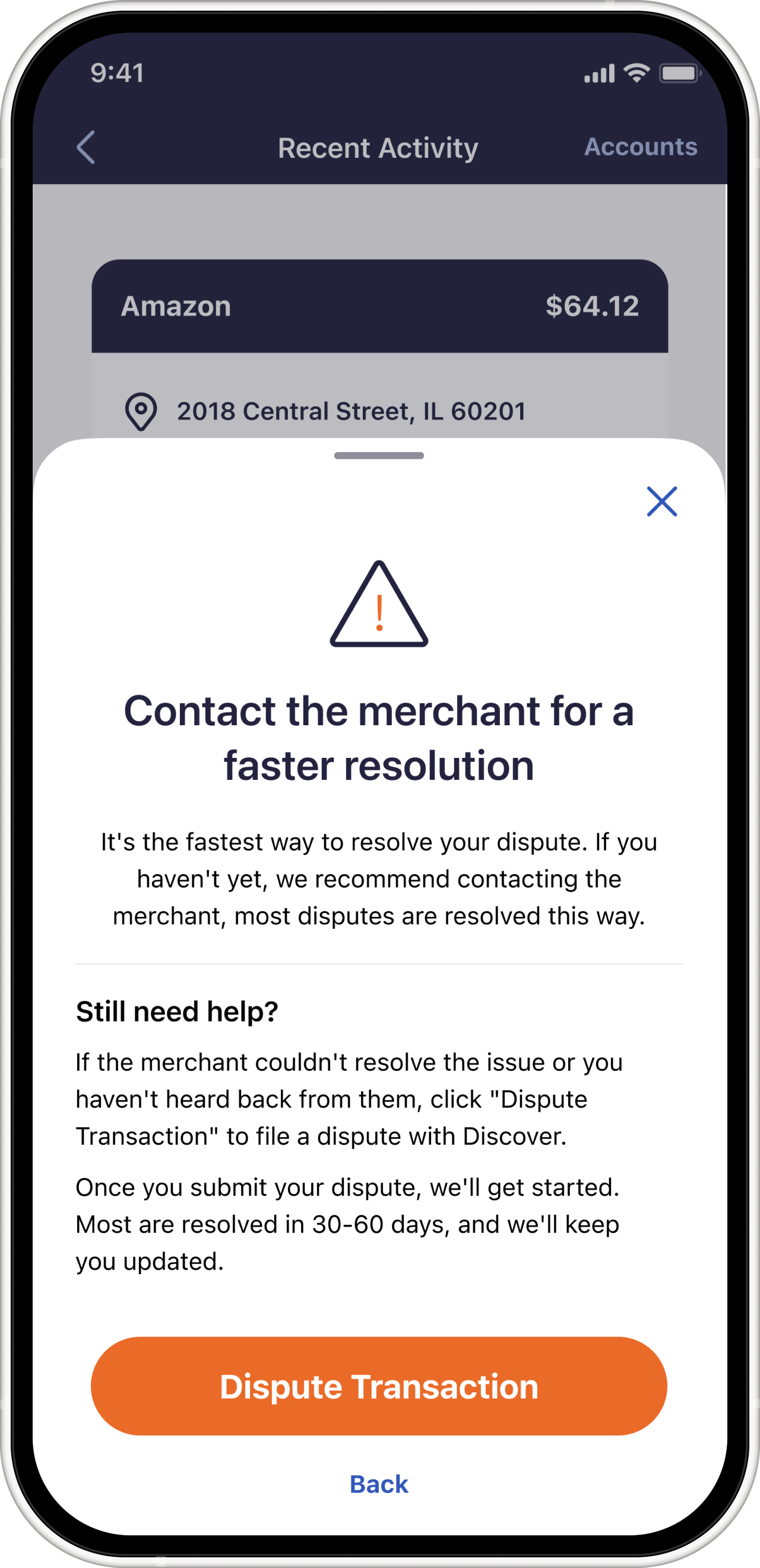
Deflect Exploration 2
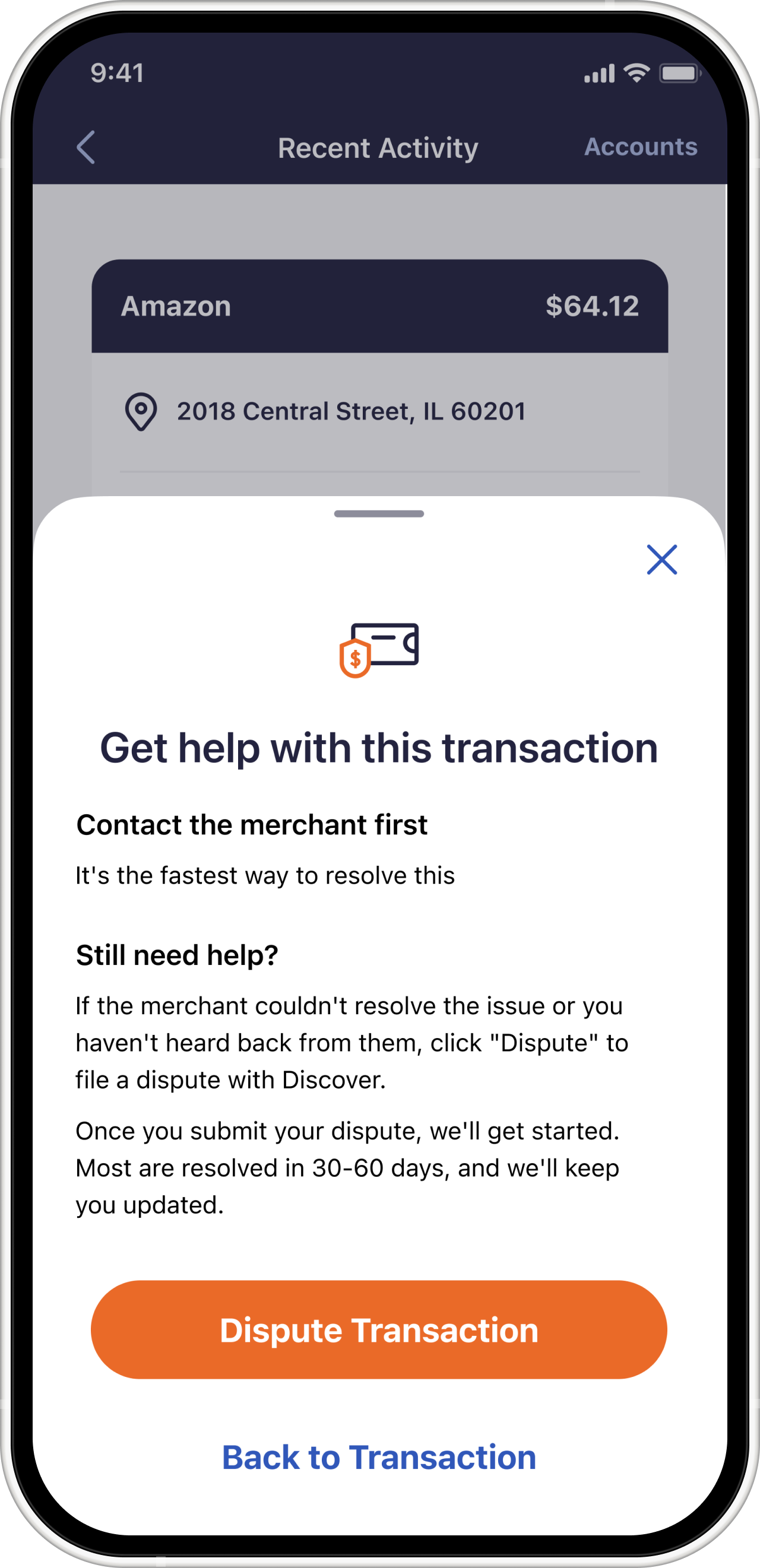
Deflect Exploration 3
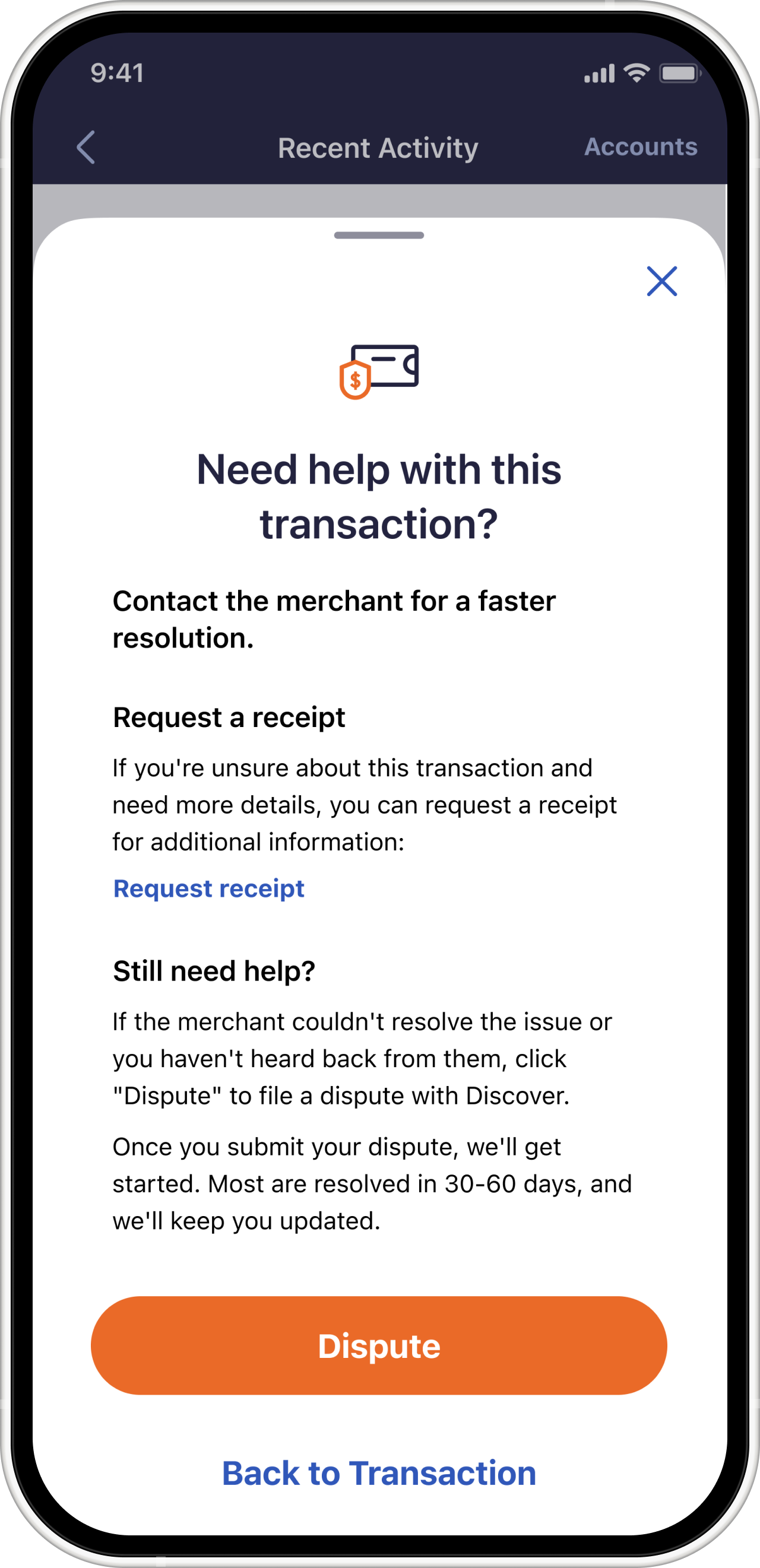
Deflect Exploration 4
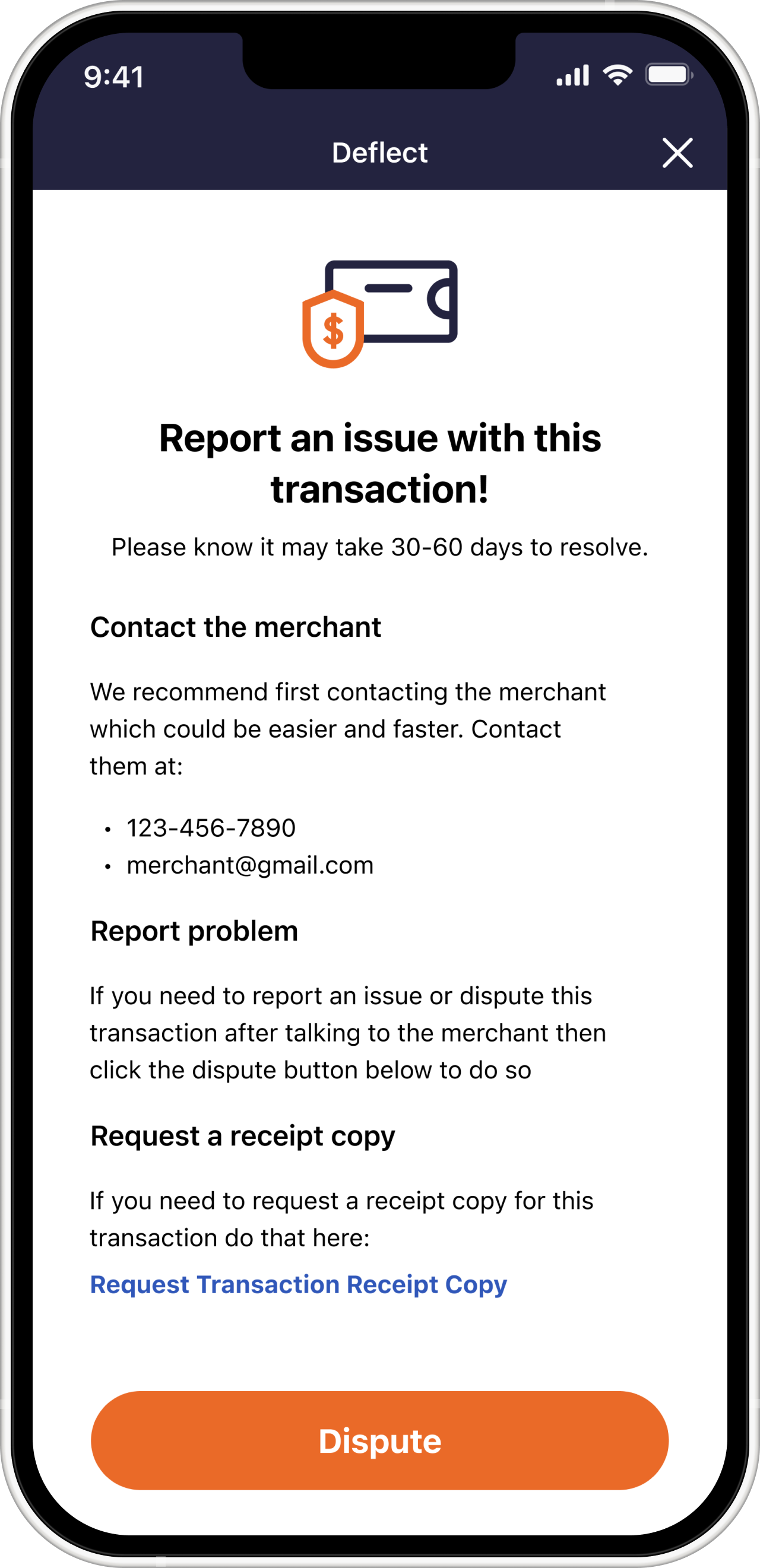
Deflect Exploration 5
Final Deflection Experience
Reducing Perceived Complexity
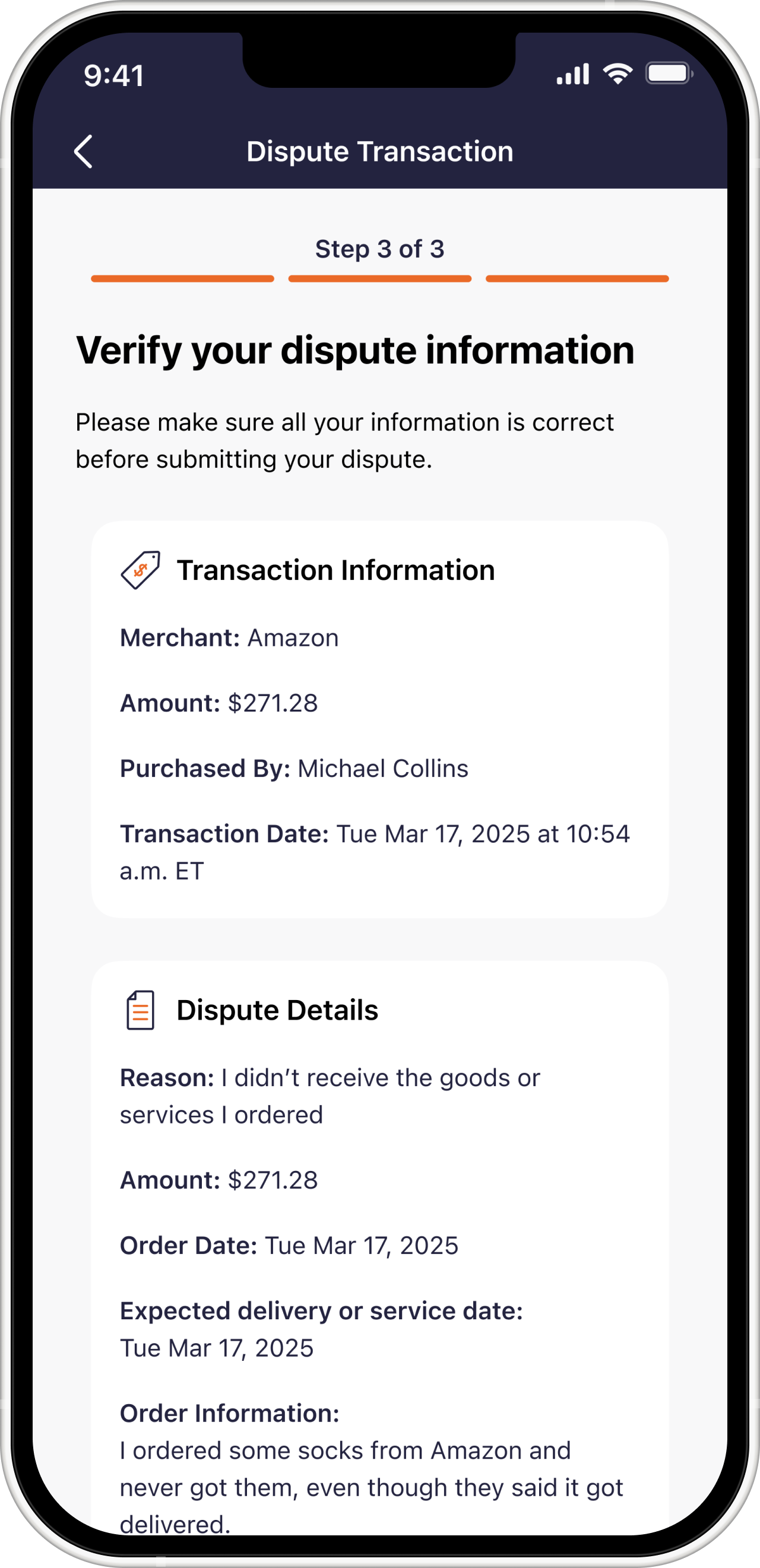
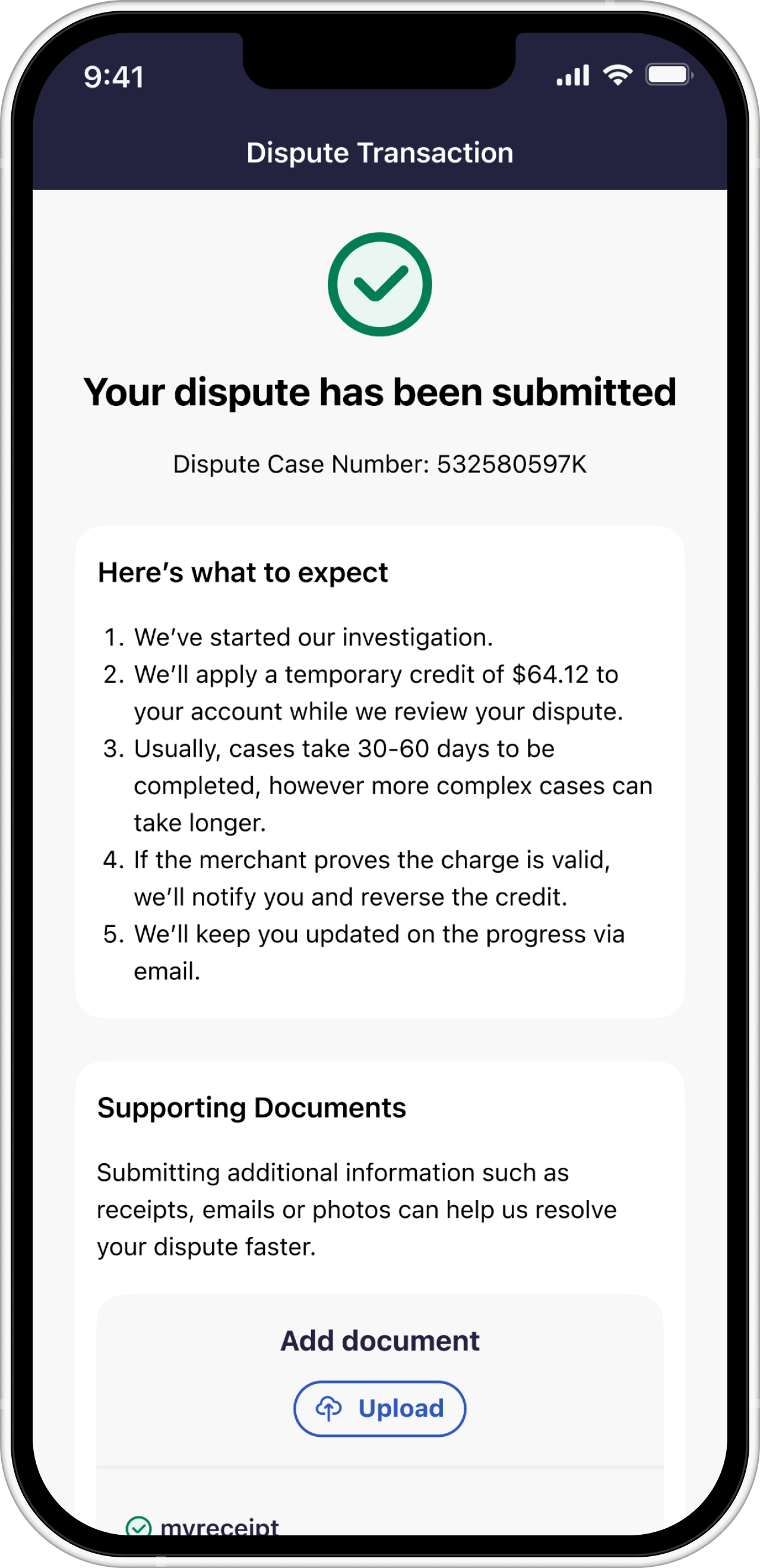
Although the dispute process required multiple pieces of information, we wanted the experience to feel simple and manageable for customers. Because the backend system is shared with customer service agents, we were limited in how much the underlying process could change. Instead, we focused on reducing the perceived complexity of the flow. By redefining a “step” as a meaningful action the customer needs to take, we streamlined the experience from five steps to three. The initial deflection screen became a bottom sheet overlaying the transaction detail screen, and the final confirmation screen was removed from the step count. While the flow still contains five screens, framing the experience as three clear actions made the process feel faster and easier, helping customers complete their dispute instead of abandoning the flow and calling support.
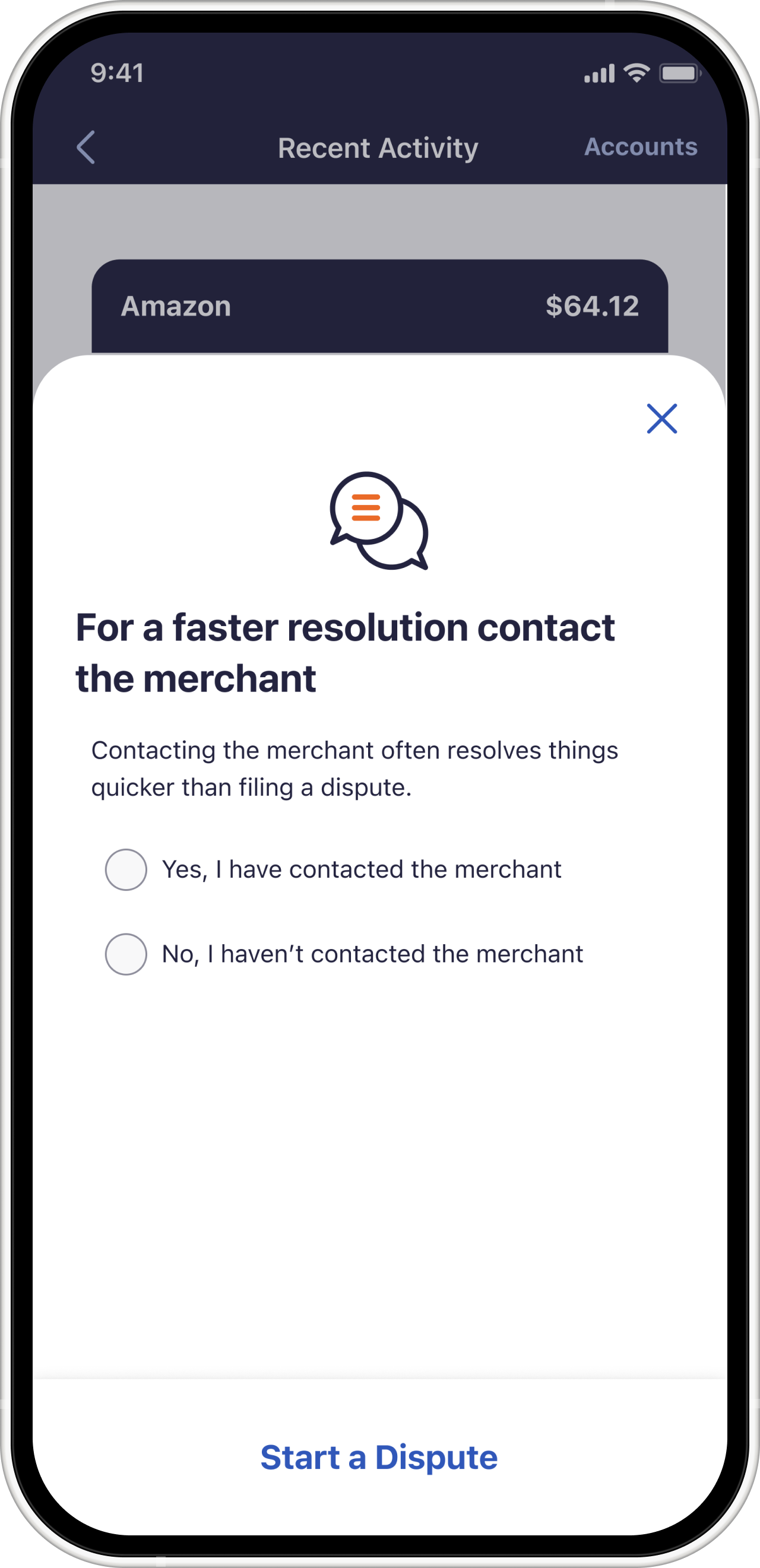
Deflection
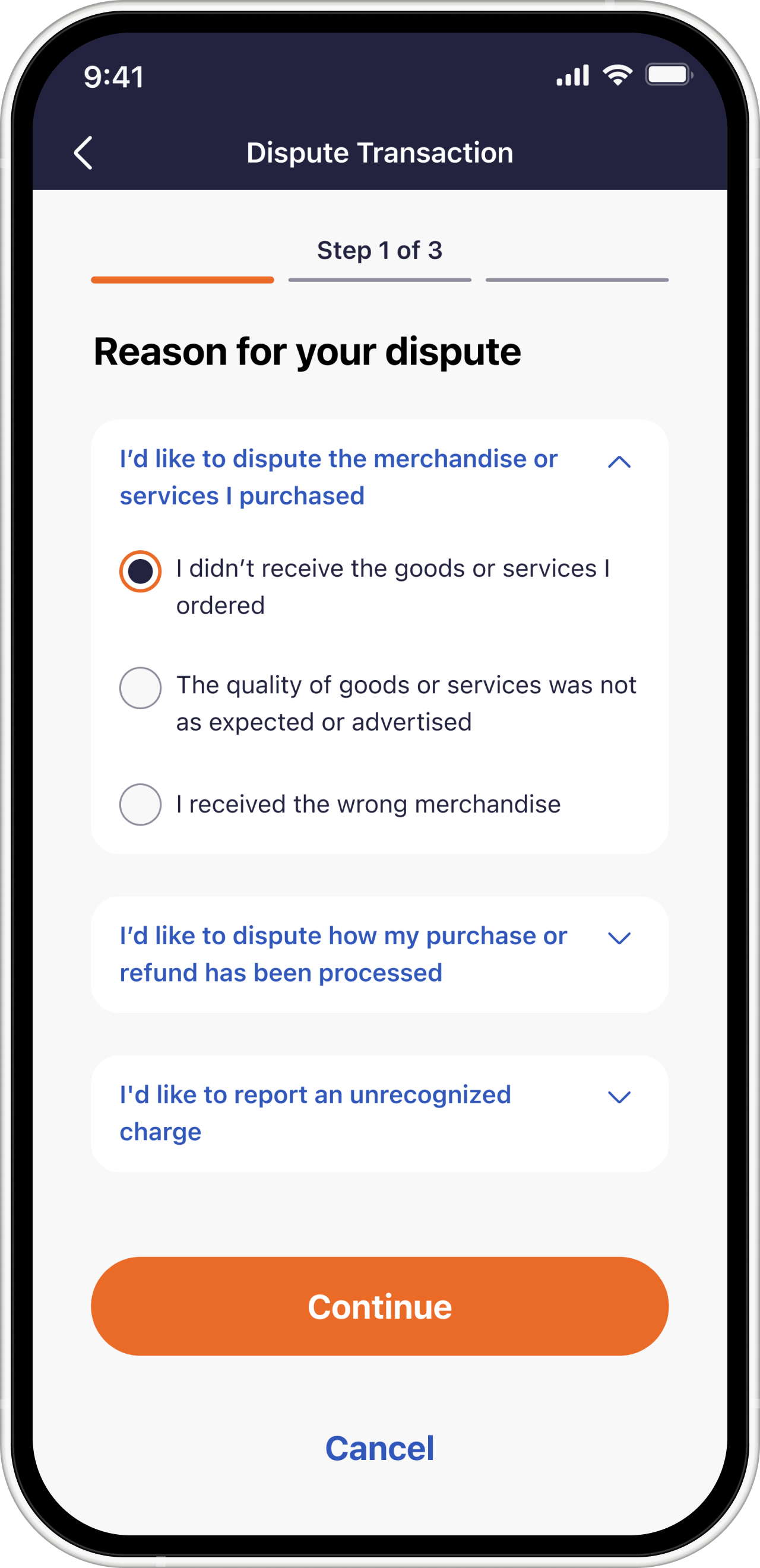
Step 1
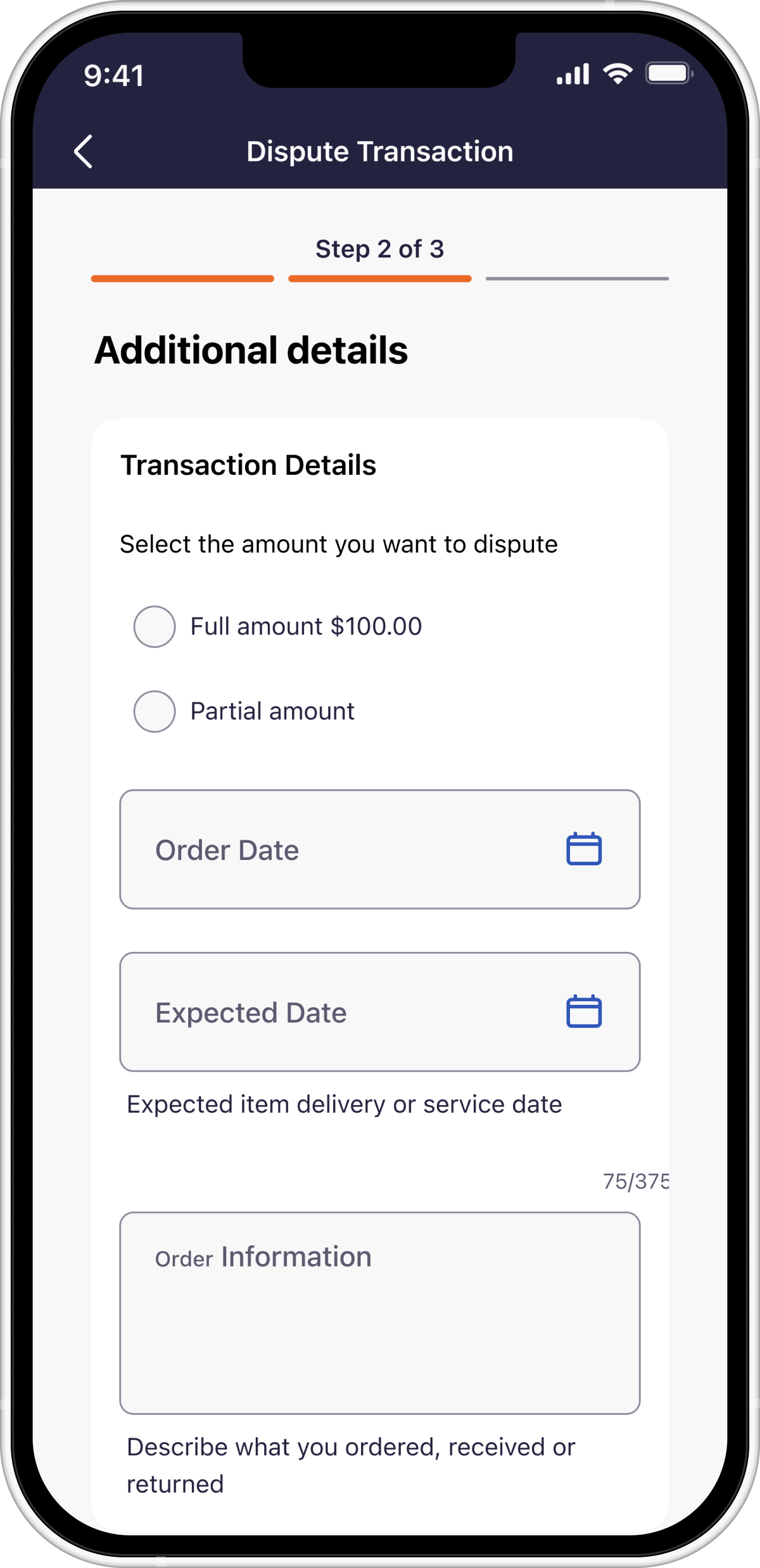
Step 2
Step 3
Confirmation
Flexible Document Upload
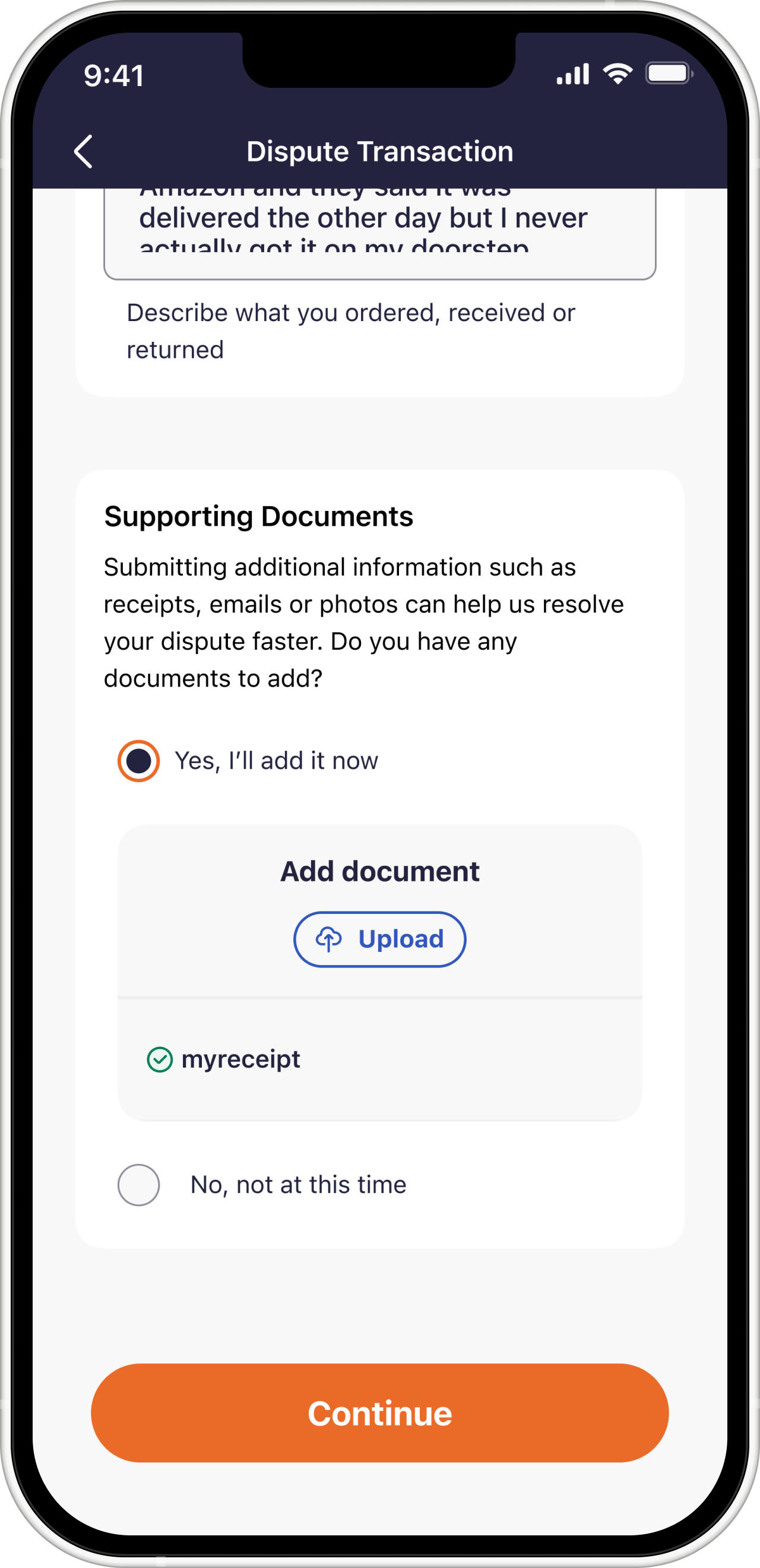
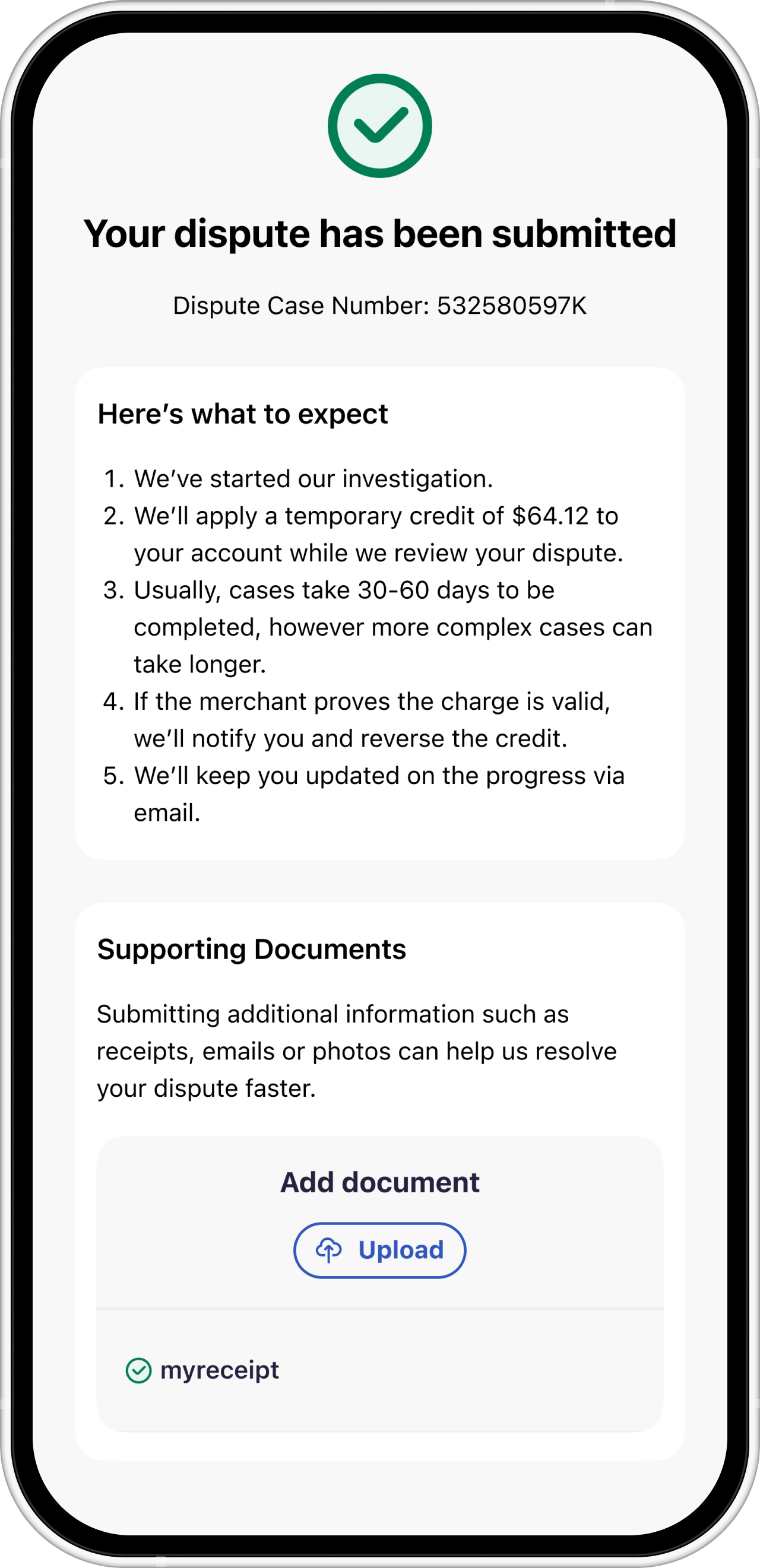
Supporting documentation is often critical to resolving disputes quickly, so we designed the experience to encourage uploads without making them a blocker. Customers are prompted to add receipts or other proof as early as Step 2, helping Discover investigate and resolve cases faster. However, because documentation isn’t always immediately available, we intentionally avoided making it a requirement to prevent users from abandoning the flow and calling support. Customers can also upload documents on the confirmation screen or return later through the Disputes Center, where they can track the status of their disputes and add additional information if needed.
Step 2
Confirmation Screen

Disputes Center
Impact
Secured executive alignment and approval by presenting a validated, mobile-first disputes strategy tied to growth and cost reduction. Delivered on time amid merger-driven priorities, completing successful usability and accessibility testing and launching a beta experience. While the broader rollout was paused due to merger decisions, the work established a scalable foundation for future digital dispute transformation.
Learnings
Next time, I’d spend more time upfront understanding where the process was actually breaking down before jumping into solutions. We moved quickly into execution, and earlier partnership with strategy could have helped us step back and uncover bigger upstream opportunities.I’d also prototype sooner. With so many stakeholders involved, even rough visuals would have helped us align faster and cut down on meeting time.